FreeHit in Cricket:
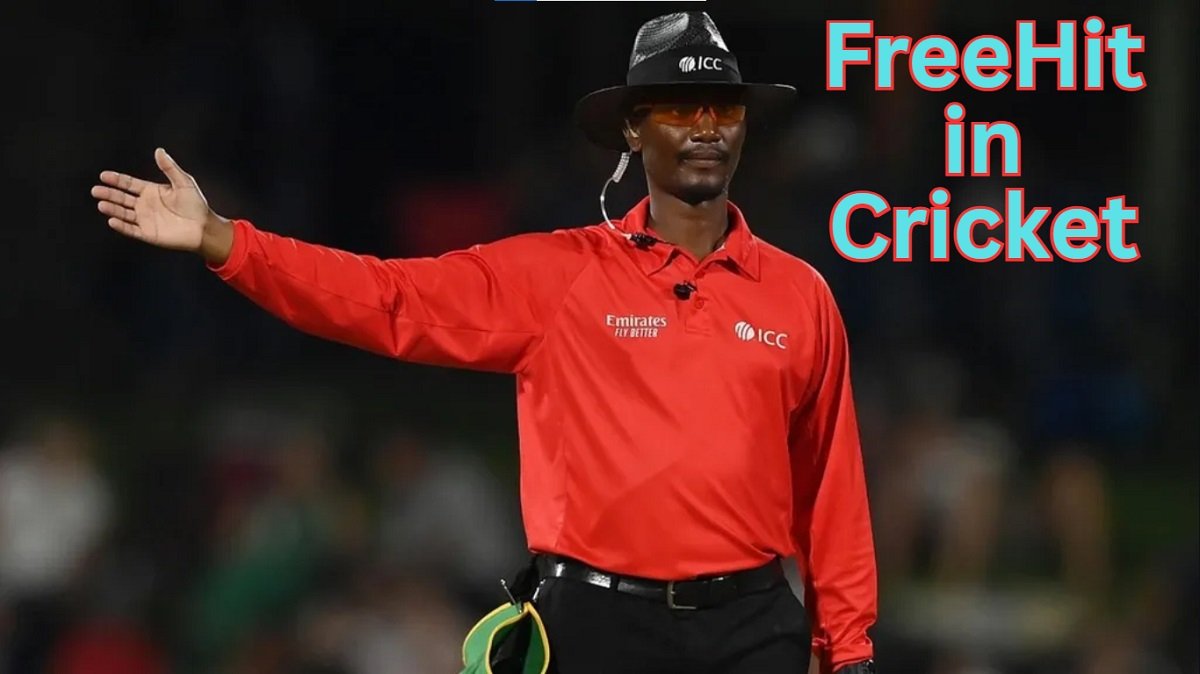
Cricket is a sport complete of exciting guidelines and exciting moments, and among the ones, “Free Hit” is one of the most exciting. Every time an umpire signals a free hit, lovers cheer loudly as it offers the batter a golden possibility to score with out the concern of having out in maximum methods.
But what exactly is a bet on cricket? How is it awarded? What can and may’t occur throughout this unique shipping? This article dives deep into the that means, history, laws, and impact of the Free Hit rule in cricket, at the side of actual-life examples from worldwide suits.
What is a Free Hit in Cricket?
A FreeHit in cricket is a special transport presented to the batting group after a bowler grants a no-ball (besides for a few types of no-balls along with brief-pitched deliveries earlier than 2007).
The subsequent ball, after the no-ball, becomes a FreeHit, this means that the batsman can’t be dismissed in maximum methods. However, they can nonetheless be run out, hit the ball twice, or impede the sector.
Simply placed, a free hit is a “free danger” for the batter to play a fearless shot with out annoying about losing their wicket.
Origin of the Free Hit Rule
The FreeHit rule turned into added by means of the International Cricket Council (ICC) in October 2007, in particular for restrained-overs codecs (ODIs and T20s). Initially, it become relevant best for front-foot no-balls (whilst the bowler oversteps the popping crease).
But later in 2015, the ICC made an important amendment — the FreeHit was extended to all kinds of no-balls, which includes:
- Overstepping
- High full tosses (above waist height)
- Wrong-arm bowling (E.G., throwing without warning)
This change become made to make the game greater truthful and exciting for spectators and gamers.
Free Hit Rule: ICC Law Explanation
The Free Hit regulation is defined under ICC Playing Condition 24.2 (for restrained-overs cricket).
Here’s how the guideline works consistent with the ICC:
“After a no-ball is called, the next delivery will be a unfastened hit for whichever batter is dealing with it. The striker may be brushed off handiest underneath the occasions that practice for a no-ball — particularly, being run out, hitting the ball two times, or obstructing the sector.”
Important Rules for Free Hit
Let’s break down the rules of a FreeHit clearly:
| Aspect | Explanation |
|---|---|
| How it is awarded | When a bowler bowls a no-ball. |
| Applies to | The next delivery immediately after a no-ball. |
| Batsman’s dismissal options | Can only be out by Run Out, Hitting Ball Twice, or Obstructing Field. |
| Bowler’s delivery | The ball must be fair (if another no-ball occurs, the next ball is again a free hit). |
| Field setting | Fielders cannot change positions (except for striker changes). |
| Runs scored | All runs scored (including byes, leg-byes, etc.) are counted normally. |
| Wicketkeeper’s position | The keeper cannot move significantly forward before the ball reaches the batter. |
Why is a Free Hit Important?
A FreeHit provides drama, exhilaration, and fairness to cricket.
Here’s why it’s vital:
- Encourages Fair Bowling: Bowlers are punished for no-balls, selling discipline.
- Gives Batters a Reward: The batting side gets a chance to attain freely.
- Increases Match Entertainment: Fans love the anticipation of a large shot during a loose hit.
- Strategic Impact: Teams often alternate subject placements and processes all through this ball.
In essence, the Free Hit makes cricket more balanced and interesting.
What Happens During a Free Hit?
During a Free Hit, the batter regularly tries to hit maximum runs — typically aiming for a boundary or a six. However, smart bowlers use versions like slower deliveries, yorkers, or extensive angles to save you massive hits.
Example:
- If a bowler oversteps and the umpire calls it a no-ball, the following ball becomes a FreeHit.
- The batsman now has a hazard to swing freely because they can not be bowled, caught, or LBW.
- If the batsman misses and gets stumped, they gained’t be out until it’s a run-out.
History of the Free Hit Rule
Let’s see how the Free Hit developed over time:
| Year | Event | Description |
|---|---|---|
| 2007 | Introduction | Free Hit introduced for front-foot no-balls in limited-overs cricket. |
| 2008–2014 | Popularization | Many ODIs and T20s saw thrilling Free Hit moments. |
| 2015 | Expansion | Rule extended to all types of no-balls. |
| 2019 | Minor Adjustments | ICC clarified fielding restrictions and keeper positioning. |
| 2023 onwards | Uniform Application | Applies consistently in ODIs, T20Is, and domestic T20 leagues like IPL. |
Famous Free Hit Moments in Cricket
Here are some of the most memorable Free Hit moments in cricket records:
- Virat Kohli vs Lasith Malinga (2012 Asia Cup)
- Kohli smashed Malinga for limitations even on unfastened hits, dominating the Lankan assault.
- MS Dhoni vs James Faulkner (2016 T20 Series)
- Dhoni made the most of a Free Hit, hitting a large six into the gang.
- AB de Villiers vs Dale Steyn (IPL 2015)
- De Villiers used the Free Hit ball to attain a wide ranging six that turned the healthy around.
- Rohit Sharma (World Cup 2019)
- Used Free Hit possibilities successfully throughout the World Cup, including essential runs.
What the Bowler Can and Cannot Do
During a Free Hit, the bowler need to nonetheless deliver a honest ball. But right here’s what’s allowed or confined:
| Allowed | Not Allowed |
|---|---|
| Bowling variations (yorkers, slower balls, bouncers under legal limit). | Overstepping again — it results in another free hit. |
| Changing angle of delivery (over or around the wicket). | Changing field placements (unless striker changes). |
| Attempting to deceive batsman within fair play. | Deliberate time wasting or fake delivery actions. |
Strategic Insights: Batting vs Bowling During a Free Hit
For Batters:
- Choose electricity-hitting zones (leg-side or straight boundary).
- Watch for slower balls or extensive deliveries.
- Try placement if the field is spread out.
For Bowlers:
- Use slower yorkers or huge traces to limit huge hits.
- Maintain intellectual composure; keep away from panic or overstepping once more.
- Communicate fielding positions clearly with the captain.
Free Hit Statistics in Modern Cricket
| Format | Average Runs Scored per Free Hit | Most Common Outcome |
|---|---|---|
| ODI Cricket | 1.9 runs | Single or Dot Ball |
| T20 International | 2.8 runs | Boundary (Four or Six) |
| IPL (League) | 3.1 runs | Six Hit |
| PSL / BBL | 2.5 runs | Boundary |
The stats show that even as Free Hits don’t always guarantee sixes, they regularly tilt momentum towards the batting team.
Fielding Restrictions on Free Hit
Fielders cannot alternate positions after the no-ball call — besides whilst the striker modifications ends. This guarantees that the batting crew receives a fair gain.
For example:
- If the striker rotates the strike on the no-ball, then fielders can regulate for the new batter.
- Otherwise, the same subject must continue to be intact for the FreeHit delivery.
Misconceptions About Free Hit
There are several myths round FreeHit in cricket. Let’s clear them up:
| Myth | Reality |
|---|---|
| Batter cannot be out in any way. | Wrong — can still be run out, hit twice, or obstruct field. |
| Free Hit applies in Test cricket. | False — only limited-overs cricket (ODI & T20). |
| The ball is always a Free Hit, even if bowler bowls a wide. | Incorrect — wide does not automatically lead to Free Hit unless previous ball was a no-ball. |
| Bowler can change field completely. | Not allowed unless striker changes ends. |
Example Scenario
Let’s apprehend with an instance:
- Bowler oversteps → Umpire calls no-ball.
- 1 run brought mechanically.
- Next ball = Free Hit.
- Batter hits the ball, receives caught — Not Out (when you consider that Free Hit).
- But if batter attempts for a 2d run and receives run out, that dismissal is legitimate.
This illustrates the freedom and hazard balance of a FreeHit.
Free Hit in IPL and Other Leagues
The Indian Premier League (IPL) has made the FreeHit a fan-favorite second.
Big hitters like Chris Gayle, Rohit Sharma, and Andre Russell have changed in shape momentum the usage of this rule. Similarly, leagues like BBL (Australia), PSL (Pakistan), and CPL (Caribbean) comply with the equal ICC tenet, ensuring consistency across global T20 cricket.
Free Hit vs Powerplay vs DRS – Key Differences
| Rule | Purpose | When It Applies |
|---|---|---|
| FreeHit | To penalize no-balls and reward batters. | After a no-ball. |
| Powerplay | Restricts fielders outside 30-yard circle. | Start of innings (6 overs in T20s). |
| DRS (Decision Review System) | Allows teams to challenge umpire decisions. | On appeal decisions (LBW, caught). |
Each rule adds its personal strategic layer to modern cricket.
Conclusion
The FreeHit rule has end up one of the maximum loved and thrilling capabilities of present day cricket. It no longer most effective rewards batters however additionally punishes bowlers for unfair deliveries, preserving the spirit of fair play. From interesting sixes to nail-biting finishes, Free Hits have produced unforgettable moments in cricket history.
As formats evolve, this rule continues to make certain balance among bat and ball — making cricket more unique than ever earlier than.
Read More: Sunrisers Hyderabad vs Kolkata Knight Riders Timeline – Full Match History & Stats